Diagnostics
S.A.S. Auto Service
Reliable Repairs. Transparent Pricing. Mobile Convenience.
Introduction to Diagnostics
Effective vehicle repair starts with accurate diagnostics. At S.A.S. Auto Service, diagnostics means more than reading a single fault code; it’s a logical, thorough process of testing, analyzing, and interpreting data to find the root cause of a problem. Since 2018 we have built a diagnostic-first culture—prioritizing precise problem identification to prevent unnecessary part replacements and ensure repairs solve the underlying issue.
Why accurate
diagnostics matter
Saves money: Proper diagnosis avoids replacing parts that are not causing the failure.
Increases safety: Identifies safety-critical failures like brake or steering system faults before they lead to accidents.
Reduces repeat visits: Correct diagnosis reduces the chance of recurring issues and saves time.
Improves repair quality: Knowing the root cause allows technicians to perform targeted repairs that restore reliability.
Supports warranty and insurance claims: Detailed diagnostic reports help substantiate claims and repair necessity.
Key benefits of our diagnostic services
Advanced tools
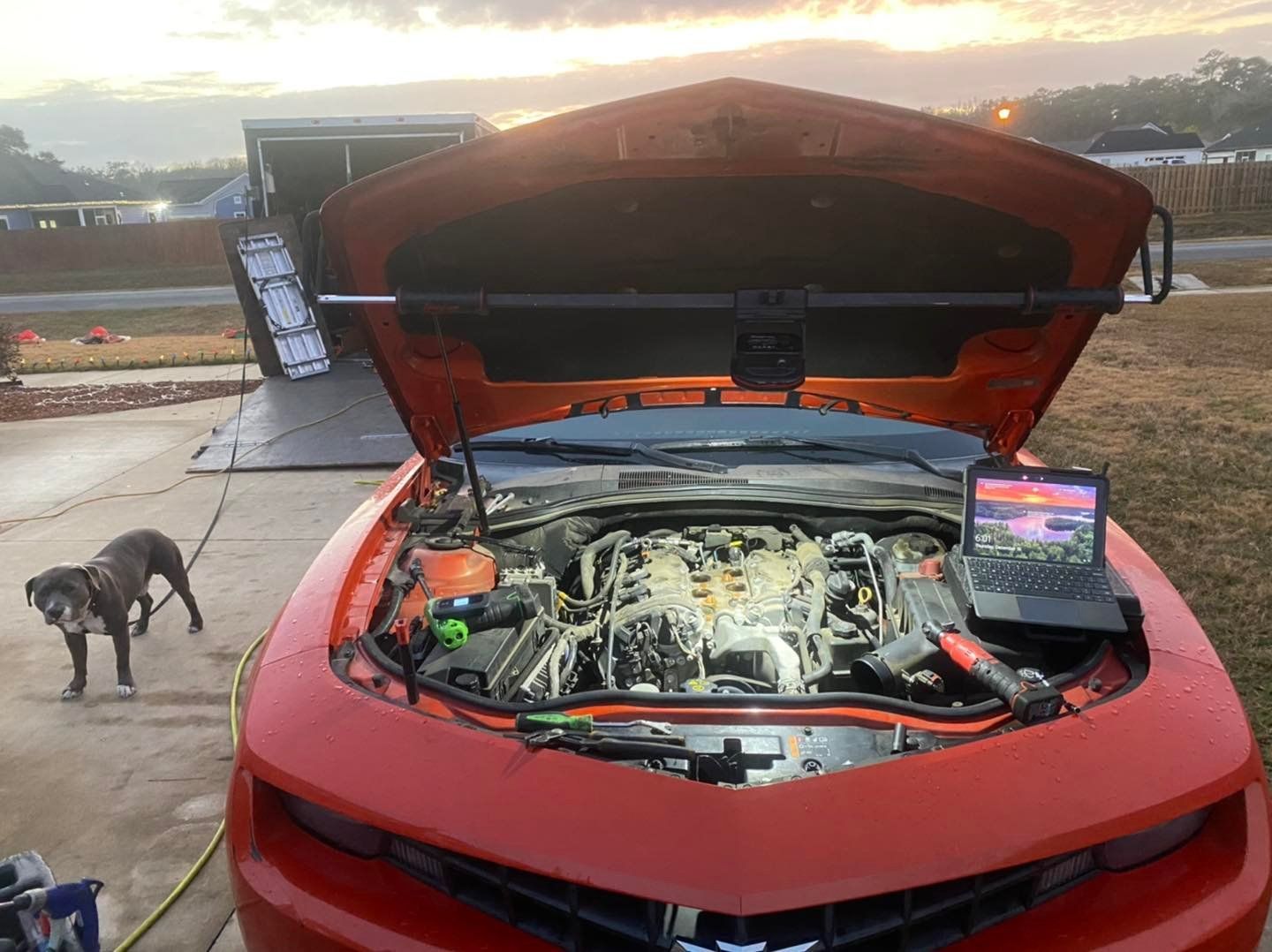
We use OBD-II scanners, oscilloscope testing, fuel pressure gauges, smoke machines (for intake and vacuum leak detection), and thermal imaging where needed.
Systematic approach
Multi-step diagnostic workflows ensure complete investigation of symptoms—intermittent and persistent.
Skilled interpretation
Our technicians combine tool data with mechanical and electrical expertise to identify likely causes and confirm them through tests.
Documentation
You receive a detailed diagnostic report with code history, test results, photos (if needed), and recommended repairs prioritized by safety and severity.
Integration with repairs
We convert diagnostics into efficient repair plans, minimizing downtime.
Common diagnostic scenarios we handle
Check Engine Light
We identify the cause of CELs including misfires, O2 sensors, catalytic converter issues, or EVAP system faults.
Starting and charging problems
Diagnosis of battery, alternator, starter, cable, and ground issues.
Intermittent electrical faults
Trace wiring and connector issues that cause lights, sensors, or electronics to behave unpredictably.
Performance problems
Engine hesitation, lack of power, or stalling that require compression testing, fuel pressure testing, and ignition analysis.
Transmission fault codes and behavior
Identify solenoid failures, sensor problems, or mechanical transmission issues.
HVAC issues
Diagnose A/C cooling performance, blower failures, or temperature control malfunctions.
Emissions failures
Pinpoint sensor or component failures causing failed emissions tests.
Our diagnostic process step-by-step
1. Customer intake and symptom capture: Detailed conversation documenting noises, behaviors, and conditions when the issue occurs.
2. Visual and safety inspection: Identify obvious issues such as fluid leaks, damaged wiring, or worn belts and hoses.
3. Code reading and data logging: Capture current and pending codes, freeze frame data, and real-time sensor readings.
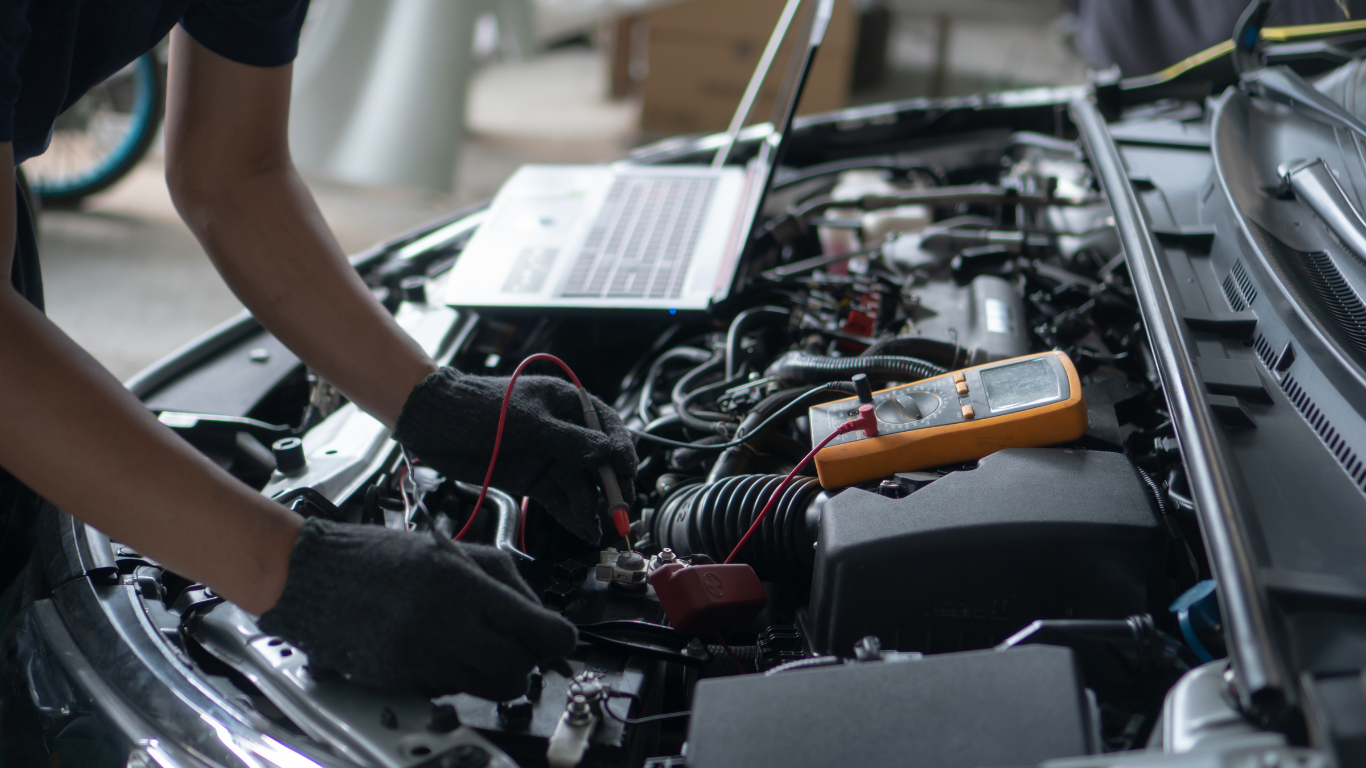
4. Targeted testing: Use of multimeters, fuel pressure testers, compression testers, and leak detection tools to confirm or eliminate potential causes.
5. Advanced diagnostics: Oscilloscope traces, smoke tests for vacuum/exhaust leaks, thermal imaging for hot spots, and road tests for reproducing conditions.
6. Documentation and recommendations: Provide a clear report with prioritized repair options and estimated costs.
7. Repair verification: After repairs, re-scan and perform tests to ensure issues are resolved and no new codes are present.
Tools and technologies we use
01
Professional OBD-II scanners with manufacturer-level capabilities.
02
Oscilloscopes and waveform analysis for ignition and sensor testing.
03
Pressure gauges for fuel and compression testing.
04
Smoke machines for vacuum and intake leak detection.
05
Thermal imaging cameras for electrical hot spot and exhaust diagnostics.
06
Data logging tools to capture intermittent faults during road testing.
Why some issues are intermittent and how we address them
Intermittent faults are among the most challenging diagnostic tasks because they may not present while the vehicle is in the shop. We use data logging during road tests, extended on-site observation, and targeted component testing under load to reproduce and capture the fault conditions. This methodical approach allows us to identify wiring flex issues, heating-related failures, or sensor degradation that becomes evident only under specific conditions.
Diagnostics
and the insurance process
For accidents or insurance claims, precise diagnostics documents the vehicle condition and needed repairs. Our diagnostic reports include fault codes, photos, and test results to support claims or explain repair necessity to adjusters. This reduces back-and-forth and helps get claims processed in a timely manner.
Preparing for a diagnostic appointment
01
Document the symptoms
Note conditions when the issue occurs (cold start, hot engine, after rain, during acceleration).
02
Bring maintenance records
Past repair history can provide clues.
03
Be available for consultation
Clear communication with the technician speeds diagnosis.
04
Understand diagnostic limitations
Some intermittent issues may require extended testing periods.
the value of a diagnostic-first approach
A diagnostic-first approach reduces unnecessary repairs, improves safety, and saves you money in the long term. At S.A.S. Auto Service we invest time and technology in diagnostics so every repair addresses the real problem. Trust our methodical technicians to locate root causes and restore dependable vehicle performance.